
The Complete Guide to Food Industry Lab Coats
When it comes to maintaining high standards of food safety and hygiene, the right protective clothing is essential. Food industry lab coats play a crucial role in protecting products from contamination while helping businesses meet food hygiene requirements. Whether you manage a food production facility, work in quality control or oversee a manufacturing site, choosing the right food manufacturing lab coats can improve safety, comfort and compliance.
In this guide, we’ll explain why lab coats matter, what features to look for and how to choose the best option for your workplace.
Why do lab coats matter in the food industry?
In food production environments, preventing contamination is a top priority. Lab coats create a protective barrier between employees’ everyday clothing and food products, reducing the risk of dirt, fibres, and other contaminants entering the production process.
As part of your food safety protective clothing and lab coats also help create a professional appearance, reinforce hygiene standards and demonstrate your commitment to safe working practices. They’re an essential part of food production and should be worn alongside other appropriate protective equipment, such as hairnets, gloves and safety footwear where required.
Which food industry professionals need lab coats?
Not everyone working in a food facility has the same role, but many employees benefit from wearing food processing workwear, including:
- Food production operatives
- Quality control technicians using quality control lab coats
- Laboratory staff carrying out food testing
- Production supervisors
- Hygiene and sanitation teams
- Maintenance staff entering production areas
- Visitors accessing food manufacturing environments
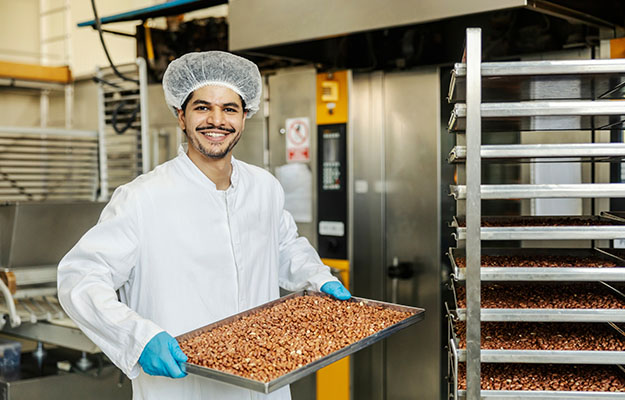
- Providing appropriate food factory workwear for everyone entering production areas helps maintain consistent hygiene standards throughout the facility.
Providing appropriate food factory workwear for everyone entering production areas helps maintain consistent hygiene standards throughout the facility.
What should you look for in a food industry lab coat?
Choosing the right lab coat isn’t just about size. Consider the following features before buying:
- Comfortable, durable fabric suitable for regular industrial washing.
- Secure fastenings, such as concealed poppers, to reduce contamination risks.
- Practical pockets, where appropriate, while ensuring they don’t compromise hygiene procedures.
- Comfortable fit that allows freedom of movement throughout the working day.
Investing in high-quality hygienic lab coats can improve employee comfort while extending the lifespan of your workwear.
Choosing the right material
Different materials suit different working environments.
Polyester-cotton blends are a popular choice because they’re durable, breathable and resistant to shrinking. They also cope well with frequent laundering, making them ideal as laboratory coats for food manufacturing.
For warmer production environments, lightweight fabrics can improve comfort, while heavier-weight materials may be better suited to cooler areas or more demanding tasks.
White vs coloured lab coats
White lab coats remain the most common choice across the food industry because they clearly show dirt and contamination, making it easier to identify when garments need changing or washing.
However, coloured lab coats can also serve an important purpose. Many manufacturers use colour coding to separate departments, distinguish allergens or identify different hygiene zones. This helps prevent cross-contamination and supports effective hygiene management.
Lab coats vs other protective clothing
Although lab coats are an important part of food industry protective clothing, they are only one element of a complete PPE programme.
Depending on your workplace, employees may also need:
- Disposable aprons
- Hairnets and beard snoods
- Protective gloves
- Safety footwear
- High-visibility clothing in warehouse areas
The correct combination of PPE depends on your risk assessment and working environment.
Hygiene best practices
Providing lab coats is only part of the solution. Businesses should also have clear procedures for their use and maintenance. These should be laid out in your Food Safety Management System / HACCP.
How many lab coats should each employee have?
Most employers provide at least two or three lab coats per employee so clean garments are always available while others are being laundered.
Can employees wash lab coats at home?
In most food manufacturing environments, professional laundering is recommended. Industrial washing processes help ensure garments are cleaned to the required hygiene standards while reducing the risk of contamination outside the workplace.
Should visitors wear lab coats?
Yes. Anyone entering food production areas should follow your site’s hygiene procedures. Providing clean visitor lab coats helps maintain consistent hygiene standards throughout the facility.
Regulatory considerations
While there isn’t a single law that specifies exactly which lab coat must be worn, food businesses have a legal responsibility to maintain appropriate hygiene standards.
Your workwear should support your food safety management system, including HACCP workwear procedures where applicable. Employers should also carry out suitable risk assessments to determine the appropriate food safety protective clothing for each role.
Choosing suitable food manufacturing lab coats forms part of demonstrating good manufacturing practice and maintaining a hygienic production environment.
Can food industry lab coats be customised?
Yes. Many businesses choose to personalise their lab coats with embroidered company logos or employee names.
Custom embroidery creates a professional appearance, strengthens your brand and makes it easier to identify staff and visitors without affecting the functionality of the garment. Many of the lab coats we sell at Complete Safety Supplies can be customised – get in touch for more information.
Sustainability considerations
Sustainability is becoming increasingly important across the food manufacturing sector.
Choosing durable, reusable lab coats that withstand repeated industrial laundering can reduce waste compared with frequently replacing poor-quality garments. Investing in well-made food industry lab coats also helps lower long-term costs by extending garment life.
Common mistakes when buying lab coats
Avoid these common mistakes:
- Choosing price over quality.
- Buying the wrong fabric for your environment.
- Ordering incorrect sizes.
- Forgetting replacement garments.
- Not considering laundering requirements.
- Ignoring colour coding where required.
Selecting the right food processing workwear from the outset can save both time and money.
Maintenance tips
To maximise the lifespan of your lab coats:
- Follow the manufacturer’s washing instructions.
- Replace damaged garments promptly.
- Store clean coats separately from used garments.
- Inspect clothing regularly for wear and tear.
- Ensure employees change garments whenever they become contaminated.
Proper care helps maintain both hygiene standards and the professional appearance of your workforce.
Final buying checklist
Before purchasing your next food industry lab coats, ask yourself:
- Are they suitable for your working environment?
- Is the material durable and comfortable?
- Do they support your hygiene procedures?
- Are enough garments available for regular laundering?
- Do you need colour coding?
- Would embroidered company branding benefit your business?
At Complete Safety Supplies, we offer a wide range of food manufacturing lab coats, food factory workwear and food industry protective clothing designed to help businesses maintain high hygiene standards while keeping employees comfortable throughout the working day.
Browse our range today to find the right solution for your workplace.
Comments are closed here.