
Cleaning and sanitising – make a difference to food safety
Maintaining the highest standards of cleaning and sanitising in the realm of food safety is crucial for anyone engaged in food manufacturing, handling, and preparation. Instances of foodborne illnesses not only pose significant risks to consumers but can also tarnish the reputation and profitability of food-related businesses.
In light of these concerns, it is imperative to incorporate key elements, such as colour-coded cleaning tools and accessories, into the hygiene and sanitation practices within the food production and service processes.
Colour coded equipment
Colour-coded mops and buckets, spillage kits, bins, soap dispensers, hand sanitisers, antibacterial pens, as well as disposable aprons and gloves, play pivotal roles in the comprehensive strategy to uphold food safety standards.
These items are not only essential in ensuring cleanliness but also contribute significantly to minimising the risks associated with the growth and transmission of harmful microorganisms, such as bacteria, viruses, yeast/mould, and parasites, known to cause food poisoning.

Difference between cleaning and sanitising
Distinguishing between cleaning and sanitising is fundamental in this process. Cleaning involves the removal of general dirt, grease, visible contaminants, and food waste from various surfaces, equipment, utensils, and dishes that come into contact with food.
This is achieved through the use of water, detergents, and mechanical actions like scrubbing, wiping, or rinsing. The primary goal of cleaning is to reduce organic matter that may support the growth of microorganisms and enhance the overall appearance and smell of the food environment.
On the other hand, sanitising is the process of eliminating or reducing the number of microorganisms present on a clean surface to a safe level. Sanitisation can be achieved through heat, such as boiling water, steam, or hot air, as well as chemicals like chlorine, iodine, or quaternary ammonium compounds.
The objective of sanitising is to eliminate the risk of cross-contamination and cross-contact, which can occur when microorganisms or allergens are transferred from one surface or food item to another.
The steps to take
Understanding that cleaning and sanitising are distinct yet complementary processes is crucial. Cleaning alone cannot guarantee the complete elimination of microorganisms, as some may persist even when the surface appears clean.
Similarly, sanitising alone is insufficient to remove dirt, grease, and food particles that can compromise the effectiveness of sanitising agents. Therefore, a sequential approach is essential:
1. Remove loose or caked-on food particles from the surface.
2. Wash the surface with warm water and detergent to eliminate stuck-on food particles, grime, and oils.
3. Rinse the surface with clean water to remove any detergent residue.
4. Apply a sanitising solution according to the provided directions, allowing it to contact the surface for the required time.
5. Allow the surface to air dry or use a single-use paper towel to dry it.
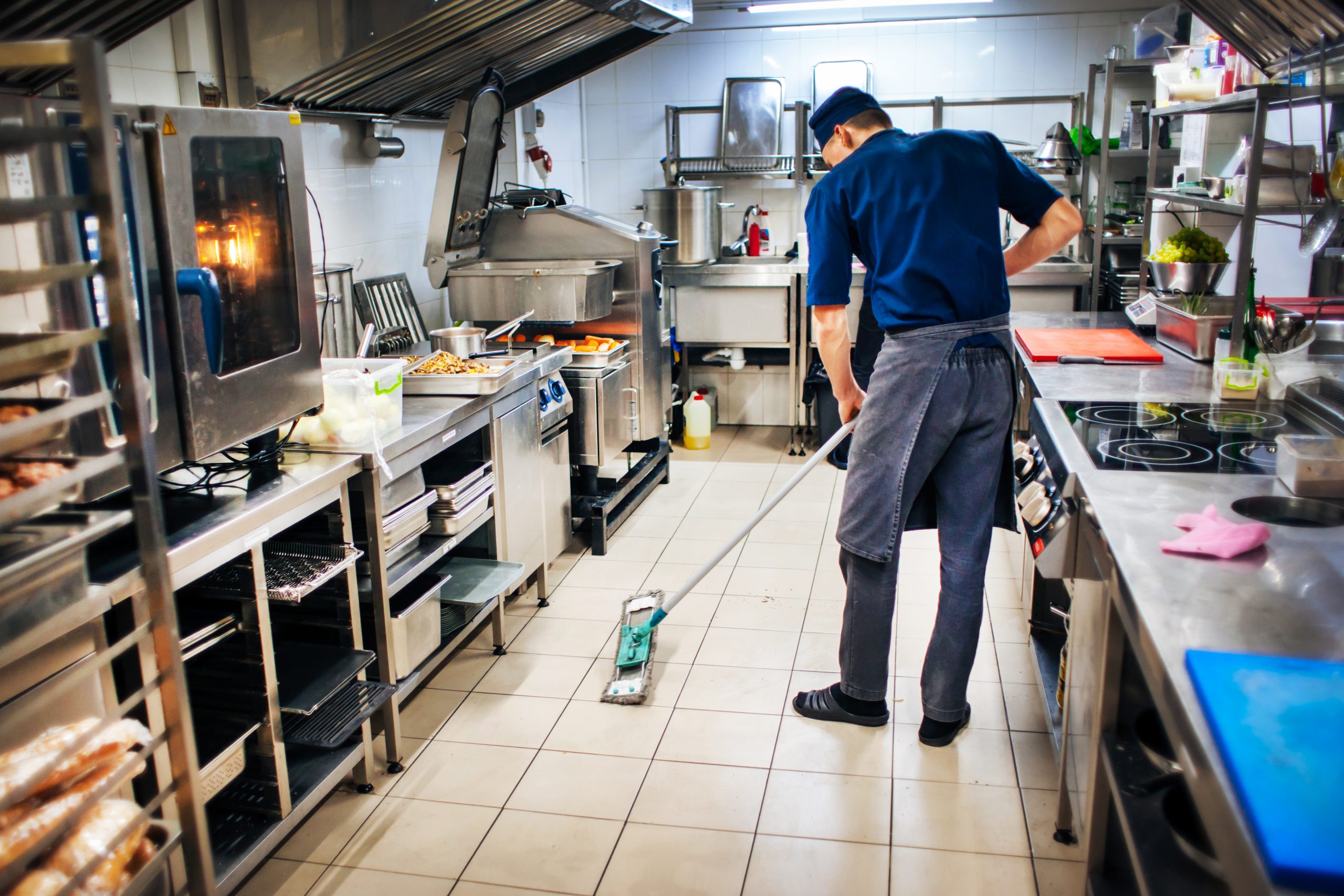
Why cleaning and sanitising matters
It is crucial to integrate cleaning and sanitising practices whenever a surface becomes contaminated, such as before and after handling raw animal products, when switching tasks, like cutting different types of food, after taking breaks, or after four hours of continuous use.
By comprehending and implementing the distinction between cleaning and sanitising, individuals involved in food manufacturing, handling, and preparation can guarantee the delivery of safe and high-quality food to their customers.
Incorporating colour-coded cleaning tools and accessories further enhances the efficiency and effectiveness of these hygiene and sanitation practices, contributing to a safer and healthier food environment.
Comments are closed here.