
Sustainable fire safety solutions: a necessity for food businesses
Fire safety is indispensable in every building – from small businesses to large industrial sites.
But as environmental regulation tightens and organisations set net-zero targets, fire protection in commercial food settings face an important question: how can fire safety be both effective and eco-conscious?
Today’s answer lies in innovative extinguisher design that prioritises performance, sustainability, and lower lifecycle impact.
This guide explores how modern solutions are changing the landscape and what that means for food businesses.
Why sustainability matters in fire protection
Traditional fire extinguishers – typically made from metal cylinders with chemical foams – are reliable, but they also have environmental drawbacks:
- Many use PFAS chemicals (per- and polyfluoroalkyl substances), which are persistent in soil and water, and linked to long-term contamination concerns. Regulatory bans are already being introduced across Europe and the UK to phase these out.
- Regular servicing can require annual visits from specialist engineers, increasing transport emissions and costs over time.
- Traditional metal units are prone to corrosion, meaning earlier replacement or more frequent overhaul.
In light of this, sustainability is no longer a “nice to have” – it is integral to responsible fire safety management.
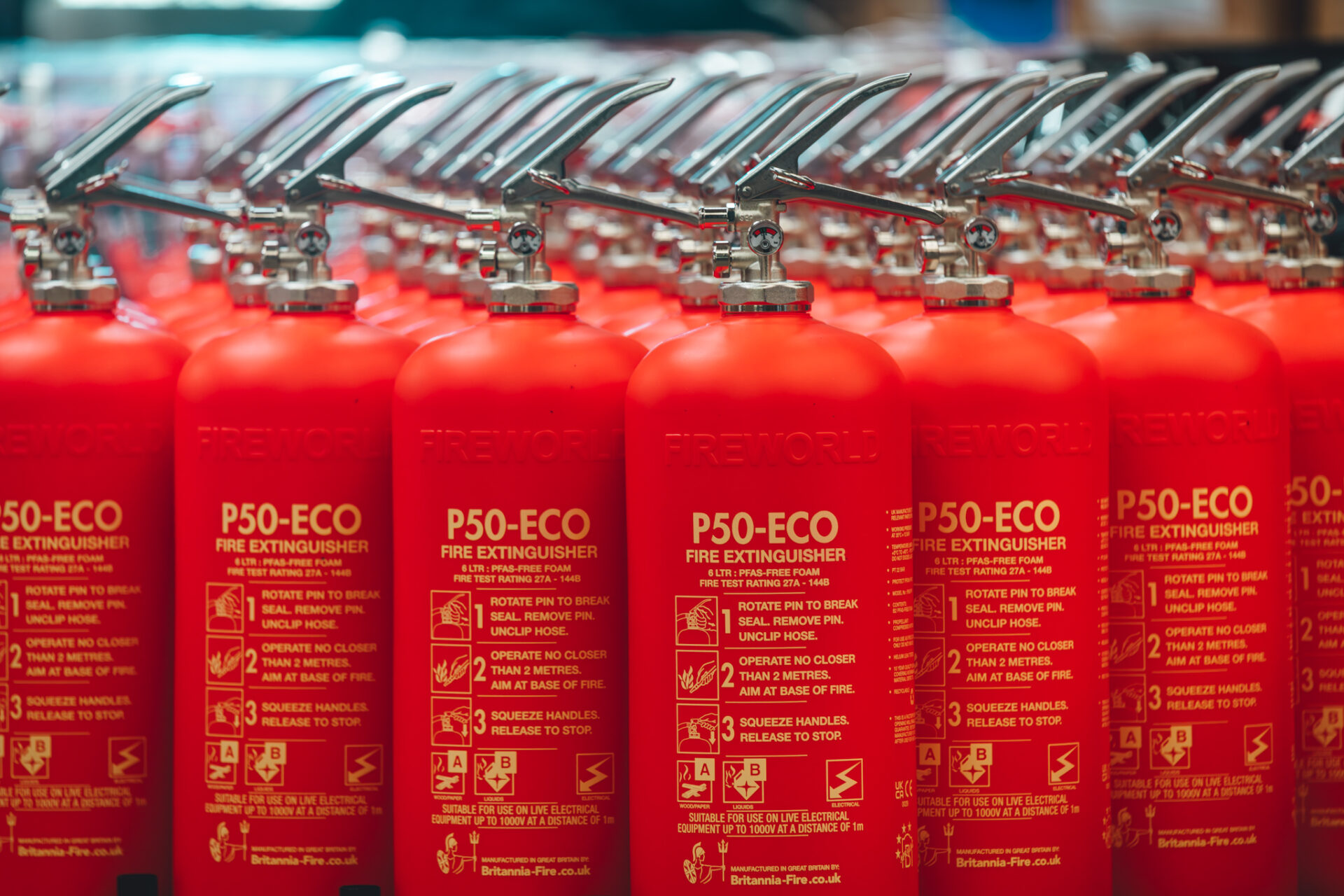
What makes a fire extinguisher sustainable?
From a practical perspective, a sustainable extinguisher can deliver on several fronts:
- Chemical Safety
Using PFAS-free foams and agents – ones that avoid “forever chemicals” – reduces long-term environmental risk and aligns with upcoming regulatory changes.
- Lifecycle longevity
Extended lifespan reduces waste. Instead of replacing units every 5–10 years, an eco-designed extinguisher with a 20-year life cycle significantly cuts material use and disposal frequency.
- Reduced servicing
Equipment that requires only self-inspection rather than annual engineer visits, reduces carbon emissions from travel and saves organisations time and money.
- Recyclability and corrosion resistance
Modern composite materials that resist corrosion also tend to be easier to recycle at end-of-life, unlike older metal cylinders with linings that degrade.
The science behind modern composite extinguishers
A notable advance in this area is the use of composite materials – rather than traditional steel – to construct extinguisher cylinders. These composites combine strength with lighter weight and reduced resource intensity.
For example:
- Composite extinguishers can be significantly lighter than metal counterparts, improving ergonomics and usability.
- They often incorporate aramid yarn cores (e.g. Kevlar®), enhancing strength without increasing weight.
- Corrosion resistance means less waste and no internal linings to fail over time.
Furthermore, by eliminating the need for annual external servicing, the overall carbon footprint across the product’s life is reduced – a win for sustainability strategies.
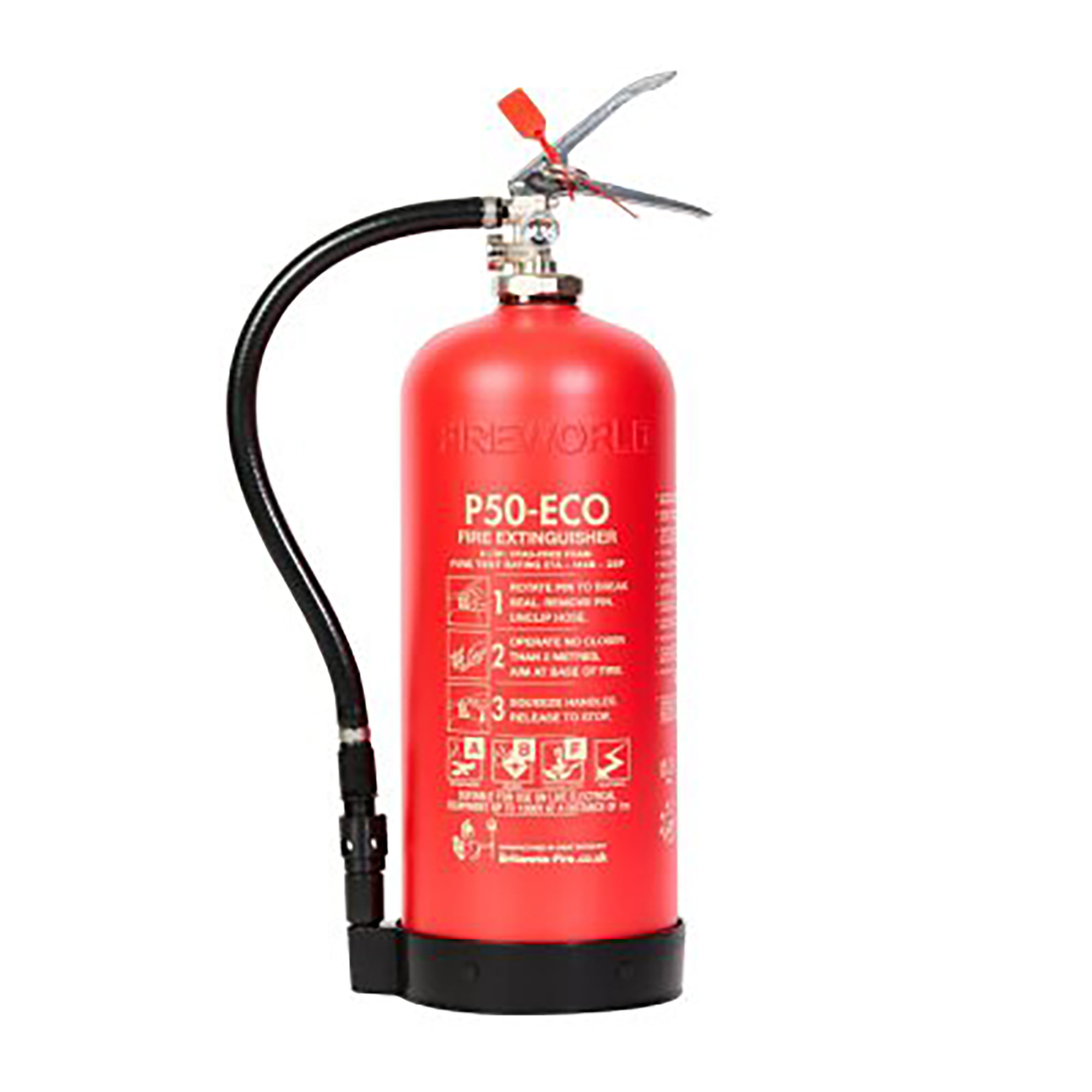
What should you look for in an eco-conscious extinguisher?
When evaluating options, consider these key performance and sustainability measures:
- PFAS-free fire suppressants – to minimise environmental toxicity.
- Long lifecycle guarantees – for example, a 20-year design life reduces replacement waste.
- Self-inspection model – reducing servicing emissions and ongoing costs.
- Lightweight composite construction – easier handling and lower material use.
- Certifications to EN3 and UKCA/BSI standards – to ensure safety compliance.
These criteria help you align fire safety equipment with broader environmental goals without compromising on protection.
Putting it all into context: sustainability and fire safety policy
As the UK works toward net-zero emissions by 2050, organisations across sectors are embedding sustainability into procurement and risk management. Switching to eco-designed fire extinguishers contributes by:
- Cutting lifecycle emissions from fewer replacements and inspections.
- Eliminating harmful chemicals that may enter ecosystems.
- Supporting wider environmental reporting and sustainability disclosure.
For food businesses, aligning fire safety choices with these goals strengthens both compliance and corporate responsibility.
Eco-conscious fire safety is more than a trend – it’s a response to environmental science, regulatory change, and practical lifecycle cost. Modern extinguisher designs that are lightweight, PFAS-free, corrosion-resistant, and durable deliver strong safety outcomes with a smaller environmental footprint.
Comments are closed here.